
WELCOME BONUS 300%
UP TO €2000 + 100
FREE SPINS
Home → Roulette
Roulette at Fortunazone Casino
97.30% vs 94.74%: Head to Head
Roulette European runs on a single-zero wheel with 37 pockets and returns 97.30% to the player over the long run, while Roulette American uses 38 pockets because a double zero is added, which pulls the return down to 94.74%. The gap of 2.56 percentage points looks small on paper but it is not small in the wallet. Staking €100 on the European wheel costs about €2.70 on average, while the same €100 on the American wheel costs roughly €5.26.
The house edge tells the same story from the other side: 2.70% for the European wheel against 5.26% for the American one. Both wheels pay a straight-up number at 35:1 and a split at 17:1, so the payout table is identical and only the pocket count differs. Per 100 spins at €1 each, the European version keeps about €2.70 and the American version about €5.26, a difference of €2.56 for the same betting pattern.
The Five Number Bet on the American wheel is the exception that makes the gap worse: it covers 0, 00, 1, 2 and 3 across 5 of 38 pockets, pays 6:1, and returns 92.11% with a house edge of 7.89%. There is no equivalent bet on the European wheel, so the double-zero layout adds a wager with an even steeper cost. For a player comparing the two wheels, the single-zero version keeps more money in play across every standard bet.
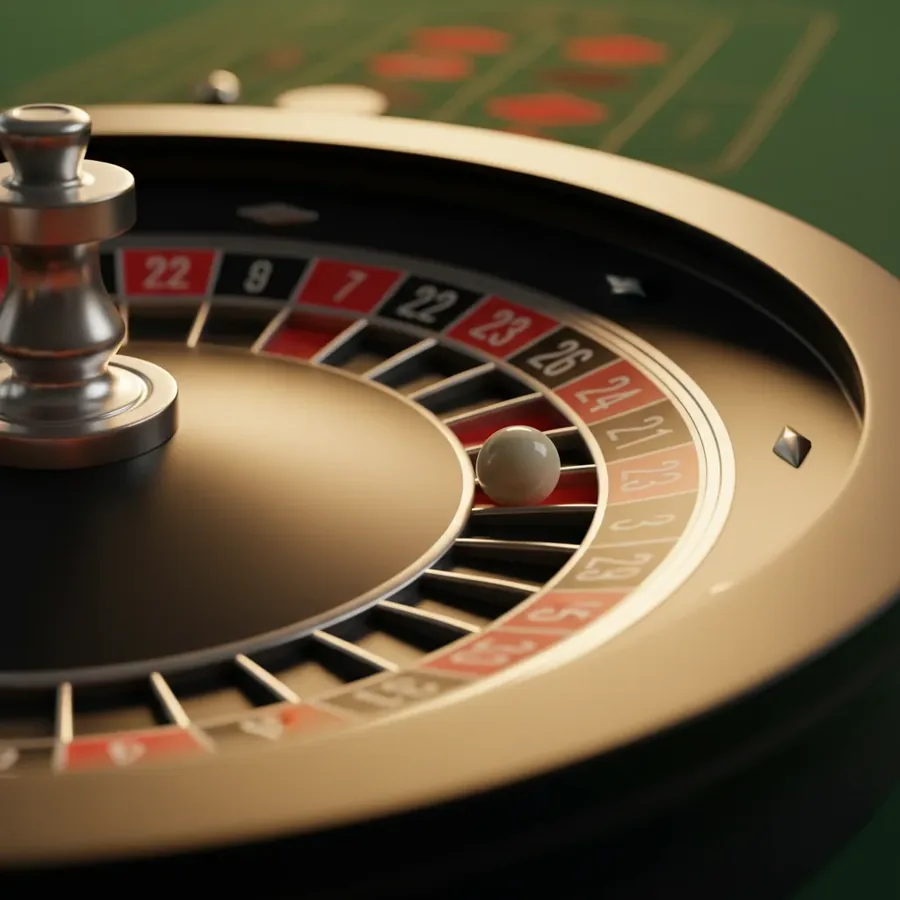
Mobile Tables: Which Betting Areas Get Smaller
On a mobile screen the roulette layout is compressed, and that changes which betting fields stay easy to tap. The French wheel with La Partage keeps 37 pockets and an RTP of 98.65% on even-money bets, but the inside positions — Straight, Split, Street and Corner — sit closer together on a small display. A Straight pays 35:1, a Split 17:1, a Street 11:1 and a Corner 8:1, so a mistap on a narrow grid costs far more than a mistap on an outside field.
Outside bets are the roomier option on mobile because Red/Black, Odd/Even and Low/High each pay 1:1 and occupy wider zones. Those three are exactly the bets that La Partage covers when 0 lands, returning half the stake on each. Inside bets do not receive that half-back, so their return stays at 97.30% with a house edge of 2.70%, while the covered even-money bets reach 98.65% with an edge of 1.35%.
Live tables carry their own layout on mobile, and the bet ranges differ by studio. Quantum Roulette from Playtech accepts €0.10 to €5,000 per bet, Mega Roulette from Pragmatic Play Live accepts €0.20 to €2,000, and Ultimate Roulette from Ezugi accepts €0.10 to €5,000. A player tapping a Straight on a small screen is choosing among 37 pockets at 35:1, so the field size, not the payout, is what shrinks first.
How the RNG Covers 37 Pockets
A European roulette wheel holds 37 pockets: the numbers 1 to 36 plus a single zero. Payouts are set as if only 36 pockets existed, which is why a Straight pays 35:1 and a Split 17:1 on a wheel that actually has one extra slot. That single extra pocket is the entire source of the 2.70% house edge on Roulette European, whose RTP is 97.30%.
The mapping is straightforward to follow. Each of the 37 pockets has an equal chance, so a Straight wins once in 37 spins on average, yet it pays at the rate of one in 36. Staking €1 on a Straight for 37 spins costs €37, and the single winning spin returns €36 in profit plus the €1 stake, leaving €1 behind — about 2.70% of the €37 wagered.
The American wheel adds a 38th pocket, the double zero, and keeps the same 35:1 payout on a Straight. The same €1 across 38 spins costs €38 while the payout still assumes 36 pockets, which is how the house edge rises to 5.26% and the RTP falls to 94.74%. Roulette French with La Partage changes the even-money side instead: when 0 lands, half the stake on Red/Black, Odd/Even or Low/High comes back, lifting those bets to 98.65% and an edge of 1.35%, while inside bets stay at 97.30%.
Why 5.26 Percent is Rarely Recommended
A house edge of 5.26% belongs to Roulette American, the double-zero wheel with 38 pockets and an RTP of 94.74%. Against the 2.70% edge and 97.30% return of Roulette European, the American wheel costs almost twice as much per unit staked. On €100 of bets that is about €5.26 lost on average instead of €2.70.
The gap widens further on the Five Number Bet. Covering 0, 00, 1, 2 and 3 across 5 of 38 pockets, it pays 6:1 and returns 92.11% with an edge of 7.89% — the only standard bet on the American layout above 5.26%. There is no equivalent wager on the European wheel, so this extra cost is unique to the double-zero format.
The French variant with La Partage shows how far the other direction goes on even-money bets. Red/Black, Odd/Even and Low/High reach 98.65% with a 1.35% edge because half the stake returns when 0 lands, though inside bets remain at 97.30% with a 2.70% edge. Live tables such as Quantum Roulette from Playtech, Mega Roulette from Pragmatic Play Live and Ultimate Roulette from Ezugi sit on the European wheel at 97.30%, which keeps the American double-zero edge out of the picture for those layouts.
Roulette bet types at a glance
| Bet | Payout | Win Chance | Numbers Covered | House Edge |
|---|---|---|---|---|
| Split | 17:1 | 5.41% | 2 | 2.70% |
| Street | 11:1 | 8.11% | 3 | 2.70% |
| Corner | 8:1 | 10.81% | 4 | 2.70% |
| Dozen | 2:1 | 32.43% | 12 | 2.70% |
| Column | 2:1 | 32.43% | 12 | 2.70% |
| Even / Odd | 1:1 | 48.65% | 18 | 2.70% |
| Red / Black | 1:1 | 48.65% | 18 | 2.70% |
La Partage Applies Only to Even-Money Bets
Roulette French with La Partage returns half the stake on even-money bets when 0 hits, which puts the RTP at 98.65% and the house edge at 1.35%. That applies to Red/Black, Odd/Even and Low/High, and each of those bets still pays 1:1. On a €100 stake spread across even-money bets, the theoretical long-run cost is €1.35 instead of €2.70.
Inside bets sit outside the rule entirely. Straight pays 35:1, Split 17:1, Street 11:1 and Corner 8:1, and on those wagers the RTP stays at 97.30% with a house edge of 2.70%. En Prison delivers the same 1.35% figure, but only on the even-money group, so a player who mixes inside and outside bets carries two different edges on one spin.
The wheel itself stays at 37 pockets, numbered 1 to 36 plus 0, so the La Partage discount comes from the rule and not from the layout. Step by step: the ball lands on 0, half the even-money stake comes back, and the remaining half is lost. The returned half is what lifts the return from 97.30% to 98.65% on that group.
37 vs 38 Pockets: The Difference
Roulette European runs on 37 pockets, numbered 1 to 36 plus a single 0, and pays as if only 36 pockets existed. That gap produces an RTP of 97.30% and a house edge of 2.70% on every bet type. Roulette American adds a second zero, 00, for 38 pockets, and the same payouts then sit against a larger wheel.
The extra pocket lifts the RTP to 94.74% and the house edge to 5.26%, close to double the European figure. Step by step: 1 divided by 37 gives roughly 2.70%, 1 divided by 38 gives roughly 2.63%, and the difference between the two layouts lands on the player's side of the table. On €100 of stakes, the American wheel costs €5.26 on average against €2.70 on the European one.
Payouts are identical across both wheels: Straight 35:1, Split 17:1, Street 11:1, Corner 8:1, Six Line 5:1, Dozen 2:1, Column 2:1 and even-money bets 1:1. Only the pocket count changes, so the same bet slips from a 2.70% edge to a 5.26% edge. The Five Number Bet on the American wheel is the exception, reaching a 7.89% house edge with an RTP of 92.11%.
The 37-Pocket European Wheel Explained
Roulette European carries 37 pockets, numbered 1 to 36 plus 0, and the payouts are set as if there were 36 pockets. Straight pays 35:1, Split 17:1, Street 11:1, Corner 8:1, Six Line 5:1, Dozen 2:1, Column 2:1, and Red/Black, Odd/Even and 1-18/19-36 each pay 1:1. The identical edge of 2.70% sits on all of those bets.
Step by step: count 37 pockets, pay out on a base of 36, and the missing pocket becomes the house edge. That produces an RTP of 97.30% and a house edge of 2.70%. A €100 stake therefore costs €2.70 on average across a long run of spins, and the same percentage applies whether the money sits on a Straight or on Red.
The French version of this wheel keeps the 37 pockets and adds La Partage on even-money bets, which moves the RTP to 98.65% and the house edge to 1.35% for Red/Black, Odd/Even and Low/High. Inside bets keep the 2.70% edge because the rule does not reach them. The wheel is identical; only the rule on 0 changes the return on part of the layout.
What Straight, Split, and Street Practically Mean
A Straight bet covers one number and pays 35:1, so a €10 stake returns €350 in winnings plus the €10 stake. A Split covers two adjacent numbers and pays 17:1, and a Street covers three numbers in a row and pays 11:1. All three sit on the 37-pocket European wheel with an RTP of 97.30% and a house edge of 2.70%.
Step by step: a Straight puts one unit on a single pocket out of 37, a Split spreads that unit over two adjacent pockets, and a Street spreads it over three in a row. The payout falls as the coverage grows, from 35:1 to 17:1 to 11:1, while the house edge stays fixed at 2.70%. Corner, Six Line and Dozen follow the same logic at 8:1, 5:1 and 2:1.
The trade is between the size of the payout and the share of the wheel that a bet covers. On €100 staked on Straights, the theoretical long-run cost is €2.70, and the same €2.70 applies to €100 staked on Splits or Streets. The American wheel carries the identical payouts but a house edge of 5.26%, so the same €100 costs €5.26 there.
How Payout Odds 35:1 Are Achieved
A straight bet on a single number pays 35:1 because the payout is set as if the wheel had 36 pockets, while the European wheel actually holds 37 pockets numbered 1 to 36 plus a single zero. A €1 stake on one number returns €35 in winnings plus the €1 stake, so €36 comes back for a 1-in-37 chance. The shortfall between 36 and 37 pockets equals a house edge of 2.70%.
The same 35:1 appears across the other inside bets, where the pocket count behind each wager grows while the payout shrinks in step. A split covers 2 of 37 pockets and pays 17:1, a street covers 3 and pays 11:1, a corner covers 4 and pays 8:1, and a six line covers 6 and pays 5:1. Every one of those ratios is the fair 36-pocket share reduced by the single extra pocket.
Outside bets move to 2:1 and 1:1: a dozen or a column covers 12 pockets and pays 2:1, while red or black, odd or even, and the 1-18 or 19-36 groups each cover 18 pockets and pay 1:1. On French roulette with La Partage, a zero returns half the stake on those even-money bets only, lifting their RTP to 98.65% and cutting the house edge to 1.35%. Inside bets stay at 2.70%.
The Payout Table From 35:1 to 1:1
A straight bet on Roulette European pays 35:1, while a split pays 17:1 and a street pays 11:1. The same single-zero wheel uses 37 pockets but sets payouts as if there were 36, so every bet type keeps the same edge of 2.70%. On a €1 straight bet a win returns €35 plus the stake, and 100 such spins at €1 each cost about €2.70 on average.
Even-money bets sit at the bottom of that table: Red/Black, Odd/Even and 1-18/19-36 each pay 1:1. A corner pays 8:1, a six line pays 5:1, and a dozen or a column pays 2:1, all on the same 37-pocket wheel. For a €10 even-money bet the profit is €10, which is far below the €350 a straight bet would return.
The five number bet on Roulette American is the outlier: it pays 6:1 and covers 5 of 38 pockets. Its RTP is 92.11% and its house edge is 7.89%, above the 5.26% carried by the rest of the double-zero wheel. A €5 stake on that bet therefore returns €30 on a hit, but the average cost per spin is higher than any European bet.
Losing Streaks: 10 Reds in a Row Is Normal
An even-money bet such as Red/Black pays 1:1 on Roulette European, and the wheel carries 37 pockets with 18 red, 18 black and one zero. Ten reds in a row is therefore a normal run of a fair sequence, not a signal that black is due. Over 100 spins at €1 per spin on Red, the average cost is about €2.70.
The zero breaks the symmetry: on Roulette French with La Partage, when 0 hits, half the stake on even-money bets is returned. That rule applies only to Red/Black, Odd/Even and Low/High, and it lifts the RTP to 98.65% with a house edge of 1.35%. A €10 Red bet on a zero pocket therefore loses €5 instead of the full €10.
On Roulette American the same even-money bet pays 1:1 but the wheel has 38 pockets including 0 and 00. The house edge is 5.26%, roughly double the 2.70% of the European wheel, so a long run of one colour costs more per spin. Ten reds in a row changes nothing about the next spin on either wheel.
A 50 Euro Budget at a 1 Euro Table
A €50 budget at a €1 table buys 50 straight bets or 50 spins on an even-money bet. On Roulette European, with a house edge of 2.70%, the expected cost over those 50 spins is about €1.35. The 300% welcome bonus up to €2,000 plus 100 free spins would add €150 in bonus money on a €50 deposit, giving a €200 balance.
The same €50 on Roulette American, with a house edge of 5.26%, costs about €2.63 over 50 spins, nearly double the European figure. On Roulette French with La Partage, the even-money edge of 1.35% brings the cost over 50 spins down to about €0.68. The choice of wheel therefore changes how long the budget lasts.
Step by step: divide €50 by the €1 unit to get 50 rounds, then multiply 50 by the house edge. At 2.70% that is €1.35; at 5.26% it is €2.63; at 1.35% it is €0.68. The five number bet on the American wheel, at 7.89%, would cost about €3.95 over the same 50 rounds.
When Is It Worth Switching to French Roulette?
Roulette French with La Partage returns half the stake on even-money bets when 0 hits, giving an RTP of 98.65% and a house edge of 1.35%. Roulette European offers 97.30% RTP and a 2.70% edge on the same 37-pocket wheel. On €100 of even-money stakes, the French rule saves about €1.35 compared with the European version.
The saving applies only to Red/Black, Odd/Even and Low/High. Inside bets on Roulette French keep the European level of 97.30% RTP and 2.70% edge, so a straight bet at 35:1 or a split at 17:1 gains nothing from La Partage. A player who only uses inside bets sees no difference between the two wheels.
Against Roulette American, the gap is wider: 1.35% versus 5.26% on even-money bets. On 100 spins at €1 each, that is about €1.35 against about €5.26 in expected cost. En Prison delivers the same 1.35% as La Partage, so either rule version brings the even-money edge down to that figure.
Contact
Live - online chat
Banking









Providers












Fortunazone Casino 2026